🎹 Não há o que temer Piano
👤 Suggested For
🎓 Intermediate Students
🏆 Advanced Students
🎹 Concert Pianists
🖐 Large Hands
🎤 Recital Repertoire
⏰ Estimated Practice Time
13
weeks to performance-ready
A serious study piece — consistent daily practice over several months is realistic.
5hper week
77htotal est.
3hard segments
* Estimate assumes ~5h focused practice/week for an average-level student at this difficulty tier.
🎯 Difficulty Assessment
Advanced
63
/ 100
Challenging - needs solid technique and independence
1,454
Total Notes
53%
Interleaved
5.33
Avg N/Beat
0
Ornaments
⚠ Challenges
✅ Accessible
🎭 Emotional Character
Nostalgic and tender, touched by a gentle wistfulness, active and densely woven throughout, holding its emotional level to the end.
🎹 Note Range - Piano Keyboard
Upper dot = RH (Right Hand)
Lower dot = LH (Left Hand)
White dot on black key = sharp/flat note used
🎚 Dynamics
f
Uniform f - very little dynamic contrast
pppmpmfffffff
📐 Note Range per Hand · Sheet Preview
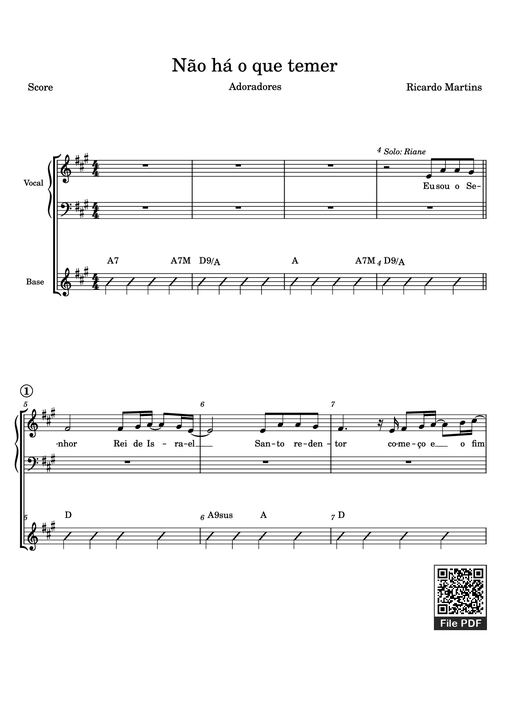
🤚 Left Hand
| Lowest | C#2 |
| Highest | B4 |
| Span | 34 st (2Oct+m7) |
| Notes | 1,007 |
| Widest leap | 34 st B4→C#2 |
🖐 Right Hand
| Lowest | C#4 |
| Highest | D5 |
| Span | 13 st (1Oct+m2) |
| Notes | 447 |
| Widest leap | 9 st C#5→E4 |
🖐 Hand Span & Chord Density
Left Hand
Max chord span: 34 semitones (2Oct+m7)
0 stOctave2 Oct
Avg chord: 3.7 notes · 212 chords
⚠️ 143 stretch chords (>octave)
Right Hand
Max chord span: 7 semitones (P5)
0 stOctave2 Oct
Avg chord: 2 notes · 135 chords
↪️ Scales & Thumb Crossing
Detected 2 scale/arpeggio runs requiring thumb crossing.
A few short runs — thumb technique needed but not dominant.
🖐 RH: 2 runs · longest 5 notes
🤚 LH: 0 runs · longest 4 notes
🔁 Repeating Phrases
27%
Repeated
Only 19 of 70 bars repeat — this piece is largely through-composed with mostly unique material throughout.
Repeated bar
Unique bar
🎯 Suggested Practice Passages
?Each "passage" is 2 consecutive measures (ô nhịp). The algorithm scores every passage by note density and interval leaps, then picks the 3 hardest for focused practice.
The hardest passages in this piece — spend extra time here before running the full piece.
📍 Measures 52–53
Hardest
📍 Measures 61–62
2nd hardest
📍 Measures 64–65
3rd hardest
❓ Frequently Asked Questions
How difficult is Não há o que temer Piano on piano?
Não há o que temer Piano is rated
Advanced
on PianoMetric's piano difficulty scale, with a score of 63/100.
It was composed by Ricardo Martins. This piece requires solid technique including hand independence, dynamics control, and expressive phrasing. The piece runs approximately 2m 20s. It contains 1,454 notes in total.
How long does it take to learn Não há o que temer Piano?
Based on PianoMetric's analysis, learning Não há o que temer Piano to a
performance-ready level takes approximately
13 weeks
(~77 total practice hours) for a advanced level student.
A serious study piece — consistent daily practice over several months is realistic.
Where can I download the piano sheet music PDF for Não há o que temer Piano?
You can download the piano sheet music PDF for Não há o que temer Piano directly on this page.
The sheet is 9 pages long.
Click the 'PDF Download' button above to get the full score.
What piano level is required to play Não há o que temer Piano?
Não há o que temer Piano is suited for
Advanced
level pianists (difficulty score 63/100).
Expect to work on hand independence, dynamics shaping, and nuanced phrasing — this is a serious repertoire piece.
What is the mood or feel of Não há o que temer Piano?
Nostalgic and tender, touched by a gentle wistfulness, active and densely woven throughout, holding its emotional level to the end. It belongs to the Piano
genre.
The piece is played at 120 BPM.